Microbial culture vs. cell culture: key differences
When people talk about fermentation in biopharma, they usually mean one of two things: microbial culture or cell culture in bioreactors. Both use the same basic controls (pH, temperature and dissolved oxygen), but they behave very differently in practice. Microbial processes tend to run fast and tolerate aggressive aeration and mixing, while cell culture needs a much gentler hydrodynamic environment and tighter control to keep cells healthy and product quality consistent. Below, we compare microbial vs. cell culture in bioreactors with a biopharmaceutical focus.
Organism types: prokaryotes vs. eukaryotes
Microbial culture typically uses prokaryotes or relatively simple unicellular eukaryotes, mainly bacteria and yeasts. Bacteria (e.g., Escherichia coli, Corynebacterium glutamicum) are prokaryotic cells with no nucleus, usually around 1-5 µm, and they can grow very quickly in relatively simple media. Yeasts are unicellular eukaryotes (e.g., Saccharomyces cerevisiae), but they are still treated as microorganisms in most industrial processes.
By contrast, cell culture involves more complex eukaryotic cells, most commonly animal cells (mammalian lines such as CHO or HEK293) or insect cells (e.g., Sf9), and sometimes plant cells or primary cells. These cells are larger (typically ~10-30 µm) and contain a nucleus and internal organelles. Many cell types are adherent, meaning they require a surface to attach to (often via microcarriers) and do not naturally proliferate freely in suspension without support.
Culture media and nutritional requirements
Microbial culture media are usually less complex and more cost-effective. They typically include a carbon source (glucose, lactose, or other sugars), nitrogen (ammonium salts or nitrates), phosphorus, sulfur, mineral salts, and sometimes yeast extract or peptones to provide trace nutrients. Depending on the process, these media can be defined/minimal (mainly salts plus a carbon source) or complex (including extracts).
In contrast, animal cell culture requires highly nutrient-rich media containing amino acids, vitamins, lipids, peptides, growth factors, and in some cases fetal bovine serum (FBS). These additional components make cell-culture media significantly more expensive than microbial media. Cell-culture media also demand stricter sterilization and handling, and they often rely on the bicarbonate/CO₂ buffering system to keep pH within a narrow operating window.
These tighter nutritional and sterility requirements explain why cell-culture media are more costly and more sensitive. In practical terms, microbes can grow in relatively simple formulations, while eukaryotic cells typically need premium supplements to achieve optimal growth and productivity.
Operating parameters: pH, temperature, oxygen and agitation
Both microbial and cell-based processes are commonly run in stirred-tank bioreactors (STRs), but the operating window is very different:
- pH: Many bacteria perform best close to neutral pH (roughly 6,0-8.0), while yeasts often tolerate slightly acidic conditions (pH 4.0-6.5). Mammalian cells typically need pH ~7.0-7.4 and within a tight range. In all cases, pH is controlled using probes and automated acid/base addition.
- Temperature: Most mesophilic bacteria are cultivated around 30-37°C. Yeasts often run at ~28-30°C (some strains can tolerate 37°C). Standard mammalian cell lines are usually operated at 37°C (insect cells around ~27-30°C, plant cells around ~25°C). For mammalian systems, even small temperature shifts can affect cell health and productivity.
- Oxygen: Aerobic microbial cultures typically require high oxygen transfer rates due to fast metabolism, so processes often use air or oxygen enrichment combined with strong agitation. Some bacteria can grow anaerobically, but many industrial fermentations are aerobic. In cell culture, oxygen is also critical, but it is usually delivered more gently (careful sparging and mixing) to avoid stressing or damaging cells.
- Agitation: Microbial fermentations often use high-power mixing (e.g., Rushton turbines or other robust impellers) because bacteria and many fungi tolerate shear relatively well. Cell culture generally uses lower-shear agitation (for example marine-style impellers, or low-shear configurations) because eukaryotic cells can be damaged by intense mechanical forces. For adherent cells, microcarriers or other low-shear approaches are used to provide a growth surface while maintaining acceptable mixing.
Shear and culture sensitivity
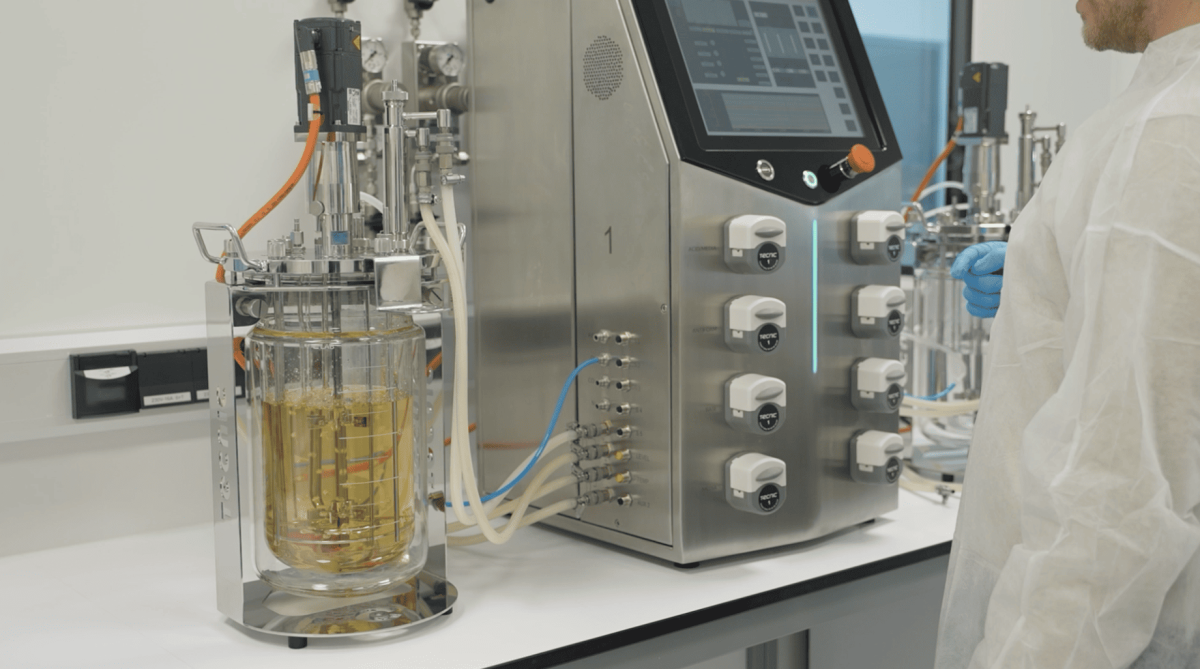
Shear stress is the mechanical force generated by agitation and sparging. Microorganisms (bacteria and yeasts) are generally much more robust: their rigid cell wall and small size allow them to tolerate high agitation and high gas flow rates without a major loss of viability. That is why microbial fermentation often runs at higher RPMs with aggressive aeration when oxygen demand is high.
Eukaryotic cells, especially mammalian cells, are far more shear-sensitive. They lack a rigid cell wall and their structure can be damaged by turbulence. Harsh mixing or vigorous bubbling can disrupt the cell membrane and reduce viability. To reduce this risk, cell culture typically uses low-shear impellers and sparging strategies, and for adherent cultures, microcarriers (small beads) are often used so cells can grow with gentler agitation.
Shear, mixing and oxygen transfer in bioreactor flow patterns
In general terms, axial-flow impellers, such as pitched-blade and hydrofoil designs, achieve more effective bulk mixing than radial impellers. This results in faster homogenisation at the same power input and a reduction of zones with extreme local shear. In contrast, the Rushton turbine generates strong, highly localised turbulence that favours gas dispersion rather than overall circulation. Most experimental and CFD studies agree that axial impellers outperform radial ones in terms of mixing intensity and volume turnover.
With respect to dissolved oxygen, Rushton turbines typically deliver the highest kLa values due to their aggressive bubble breakup. Axial impellers generally reach slightly lower kLa at equivalent power, but they can compensate through improved fluid circulation and more uniform gas distribution. In practice, at similar power inputs, the Rushton turbine often has an advantage in absolute kLa, while hydrofoil impellers achieve effective oxygenation with lower energy consumption by maintaining high recirculation rates throughout the vessel.
Doubling time and culture productivity
A major difference is growth rate. Bacteria can double in minutes (for example, E. coli is often cited at roughly 20-30 minutes under optimal conditions). Yeasts typically double in ~60-90 minutes. Mammalian cells are much slower, often requiring many hours to a day or more (commonly ~18-24 hours or longer) to double. As a result, cell-culture runs are usually much longer than microbial runs.
This has a direct impact on productivity. Microbial fermentations can quickly reach very high cell densities (for example 10⁸-10⁹ cells/mL) in a matter of hours, producing large amounts of biomass or product in a short time. Fed-batch bacterial processes can generate tens of grams per litre of certain proteins or metabolites within a day (depending on the product and process). By contrast, mammalian cell cultures typically reach ~10⁶-10⁷ cells/mL, and recombinant protein titres (such as monoclonal antibodies) are often in the mg/L to g/L range after several days. Cell-based production is slower, but it enables complex proteins (including antibodies and glycosylated products) that bacteria cannot process in the same way.
Scale-up considerations
When moving from lab scale to industrial manufacturing, the main challenges differ depending on the type of culture:
- Microbial culture: Scale-up commonly reaches very large working volumes (10³-10⁵ L) in stainless steel tanks. High metabolic rates generate significant heat, so efficient cooling systems (jackets and internal coils) are essential. Strong agitation is also needed to maintain oxygen transfer and prevent dead zones. Because bacteria are shear-tolerant, operations can be relatively flexible (batch, fed-batch, continuous), and feeding strategies can be adjusted to optimise productivity.
- Cell culture: Scale-up is often smaller (typically up to ~10⁴-10⁵ L) and more sensitive. The priority is keeping the vessel homogeneous without harming the cells. This usually means gentler aeration (fine spargers, controlled oxygen addition) and low-shear agitation. Single-use bioreactors (SUBs) are widely used in mammalian processes because they simplify sterility and changeover. For adherent cells, scale-up also introduces extra complexity, often requiring microcarriers or 3D scaffolds to provide enough growth surface.
Overall, microbial processes are typically simpler to scale from a hydrodynamics point of view because the culture is more robust, while cell culture scale-up requires tighter equipment and design choices to protect viability.
Monitoring and control strategies
In both cases, critical parameters are monitored and controlled in real time:
- Sensors and automated control: pH, temperature, dissolved oxygen (pO₂/DO) and agitation are controlled using in-line sensors integrated into the bioreactor. Automation systems adjust acid/base addition, nutrient feeds (via pumps) and aeration according to predefined recipes. In cell culture, additional monitoring is common, such as CO₂ control and biomass/viability indicators (for example, turbidity or capacitance-based measurements).
- Off-line analytics: Periodic sampling is used to measure viable cell concentration (manual counts, automated counters or flow cytometry), key metabolites (glucose, lactate, ammonia) and product concentration (for example, recombinant protein titre).
- Advanced PAT tools: Industrial facilities increasingly use optical sensors, dielectric spectroscopy (capacitance) and other in-process analytical technologies (PAT) to estimate biomass and culture state without interrupting the run. These tools help optimise parameters in real time and support consistent product quality.
While the fundamentals of monitoring are similar, eukaryotic cell cultures typically need tighter control. A rapid shift in pH, temperature or oxygen can trigger alarms or compromise a mammalian culture quickly, whereas microbial cultures often tolerate wider fluctuations before performance is seriously affected.
Costs, productivity, and regulatory requirements
From an economic and compliance perspective, microbial and cell culture processes differ in clear ways:
- Production costs: Microbial processes usually have lower operating costs per litre (cheaper media and faster runs). That said, if the end product is a drug substance, significant resources still go into downstream purification and validation. Cell culture relies on much more expensive media and high-grade sterile infrastructure (filters, controlled environments, cleanrooms), which increases both operating and capital costs.
- Productivity: Microorganisms can produce large amounts of product quickly, but the molecules are often simpler and typically lack complex post-translational modifications. Cell culture is used to produce more complex proteins (for example, glycosylated human antibodies), although the process is slower. Recent improvements have increased mammalian titres (often reaching several g/L for monoclonal antibodies), but cultures still usually run for multiple days.
- Regulatory focus: Both approaches must comply with strict GMP requirements, but the risk profile differs. In cell culture, regulators place strong emphasis on viral safety and genetic stability of the production cell line, with step-by-step controls to demonstrate the absence of adventitious agents. In microbial processes, endotoxin control (especially with Gram-negative bacteria) and product purity are major priorities. Ultimately, the final product must meet the relevant regulatory expectations (for example, USP, EMA and FDA requirements).
Overall, microbial cultivation stands out for speed and lower cost, while cell culture is essential for complex biopharmaceuticals that require advanced molecular processing.
Typical applications
- Microbial culture: Used to manufacture antibiotics (for example, penicillin, streptomycin), amino acids (glutamate, lysine), industrial enzymes (amylases, proteases), biofuels (ethanol) and simpler recombinant proteins. Examples include recombinant human insulin produced in coli, growth hormone expressed in bacteria, recombinant vaccines produced in yeast (such as hepatitis B), and food additives or enzymes produced by fungi and bacteria.
- Cell culture: Central to the production of therapeutic monoclonal antibodies (oncology and autoimmune indications) and complex glycosylated proteins (for example, erythropoietin and clotting factors). It is also widely used for viral vaccines (virus propagation in animal cells, for example influenza or rabies) and for gene therapy manufacturing (viral vector production). In addition, tissue and cell-based manufacturing continues to grow in importance for regenerative medicine and cell therapies.
Comparative table of key characteristics
| Characteristic | Microbial culture | Cell culture (mammalian/insect/plant) |
|---|---|---|
| Typical organism | Bacteria, yeasts (prokaryotes/simple eukaryotes) | Animal, plant, or insect cells (complex eukaryotes) |
| Cell size | Small (≈1–5 µm) | Larger (≈10–30 µm) |
| Media type | Simple (salts, sugars, yeast extract) | Complex (amino acids, serum or growth factors) |
| Nutritional requirements | Basic nutrients (C, N, P, S, minerals) | Many supplements (hormones, vitamins, lipids) |
| Operating pH | 6–8 (bacteria), 4–6 (yeasts) | 7.0–7.4 (narrow range) |
| Typical temperature | 30–37 °C | 30 °C (insect), 37 °C (mammalian) |
| Agitation / shear | High agitation tolerated | Gentle agitation; shear-sensitive cells |
| Growth rate | Very fast (20–90 min per doubling) | Slow (hours/days per doubling) |
| Typical cell density | Very high (108–109 cells/mL) | Lower (106–107 cells/mL) |
| Product type | Enzymes, metabolites and simpler proteins (insulin, antibiotics) | Complex therapeutic proteins (antibodies, clotting factors) |
| Scale-up | Easier to large scale (103–105 L) | More limited scale-up (102–104 L, frequent use of SUBs) |
| Relative cost | Lower (cheaper media, standard consumables) | Higher (expensive media, specialised equipment) |
Conclusion
In stirred-tank bioreactors (STRs), the difference between microbial and cell culture is not just “which organism you use”, it is how that organism shapes process design and operation. In microbial fermentation, the priority is often delivering enough oxygen and removing heat with high-intensity mixing, because the culture can tolerate it and the kinetics demand it. In cell culture, the focus shifts: you need homogeneous conditions and tight control (pH, DO, CO₂, osmolality) while keeping shear low and minimising bubble-related stress, because viability and, in many cases, product quality are on the line.
If you’re new to bioprocessing, a practical rule of thumb is: microbial equals power and O₂, cell culture equals gentleness and stability. From there, every project should be grounded in data (mixing time, kLa, metabolic profiles and critical quality attributes) and in platform decisions (multi-use vs single-use, feeding strategy, sensors and automation).
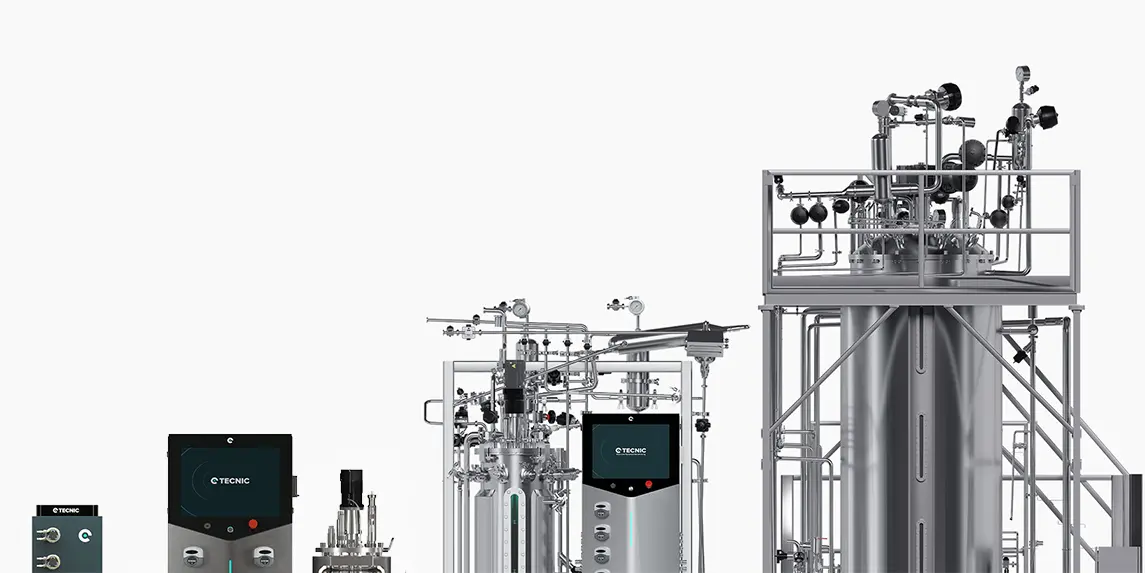
In this context, TECNIC offers both stainless-steel bioreactors and single-use bioreactors designed to support every stage of scale-up, from laboratory work through to production. If you want to validate which configuration best fits your process (microbial or cell culture), TECNIC’s team can support you with bioreactor selection, agitation and aeration strategy, and scale-up criteria to keep the process reproducible and transferable across scales.
Frequently asked questions about microbial vs cell culture in bioreactors
Microbial culture is the growth of microorganisms, mainly bacteria or yeasts, under controlled conditions to produce biomass or a target product (for example enzymes, metabolites, or recombinant proteins). In bioreactors, the focus is often on fast growth, strong mixing, oxygen transfer, and heat removal.
Cell culture typically refers to growing eukaryotic cells (mammalian, insect, or plant cells) to make complex biological products such as monoclonal antibodies, viral vectors, or glycosylated proteins. In bioreactors, conditions must be stable and gentle to protect viability and product quality.
Microbial culture is usually faster, more tolerant to shear, and often needs high oxygen transfer. Cell culture is slower, more shear-sensitive, and needs tighter control of pH, DO, CO2, osmolality, and sterility. Those differences affect agitation, aeration, and scale-up strategy.
Many microbial processes have high oxygen demand because cells grow and metabolise quickly. Meeting that demand can require higher power input, stronger agitation, and higher gas flow. In practice, oxygen transfer can become a bottleneck, especially as density increases.
Mammalian cells lack a rigid cell wall, so strong turbulence, bubble bursting, and high local energy dissipation can damage membranes and reduce viability. That is why cell culture bioreactors often use gentler agitation and controlled aeration strategies.
Cell culture media typically includes many defined nutrients and supplements (amino acids, vitamins, lipids, and growth factors). It also requires strict handling and sterile filtration. Microbial media can often be simpler (salts and a carbon source), depending on the organism and process.
Many bacteria run near neutral pH and around 30 to 37 °C, while yeasts often tolerate slightly acidic pH. Mammalian cell culture typically runs close to physiological pH (around 7.0 to 7.4) and 37 °C, with tighter control because cells are less tolerant to drift.
Microbial fermentation can scale to very large volumes, but oxygen transfer and heat removal become critical. Cell culture scale-up is often more limited and focuses on maintaining uniform conditions with low shear, stable gas handling, and tight process control, sometimes using single-use bioreactors.
Microbial culture is commonly used for enzymes, metabolites, and simpler recombinant proteins. Cell culture is used for complex therapeutic proteins (like monoclonal antibodies) and for processes that need eukaryotic machinery, for example viral vaccine production or viral vector manufacturing.
Both are vulnerable to contamination, but cell culture is usually less forgiving because growth is slower and conditions are more selective. Typical risks include bacteria, fungi, and mycoplasma in cell culture. Good aseptic technique, validated sterilisation steps, and routine monitoring are essential in both cases.
References
- A Decade of Microbial Fermentation - BioProcess International. Context on microbial fermentation in bioprocessing and how upstream platforms have evolved.
- Cell Culture Bioreactor - ScienceDirect Topics. High-level overview of cell culture bioreactors, with concepts relevant to operating constraints vs microbial systems.
This article provides a technical, data-driven overview of microbial culture vs cell culture in stirred-tank bioreactors (STRs). It compares how each system impacts media requirements, growth kinetics, oxygen transfer needs, agitation and shear sensitivity, process monitoring, and scale-up from laboratory to pilot and production. The content is structured to help junior bioprocess professionals understand why the same bioreactor platform is operated very differently depending on whether you are running a microbial fermentation or a cell culture process.
This article has been reviewed and published by TECNIC Bioprocess Solutions, a manufacturer of scalable stirred-tank bioreactors, tangential flow filtration systems, and single-use consumables for bioprocess development, pilot operation, and GMP manufacturing.